

The epic Kalevala relates ancient tales, mainly from the Karelia region, and has become a cornerstone of Finland’s cultural identity. Its poetry has reached readers all over the world, including J.R.R. Tolkien, who took inspiration from it.
What exactly is the Kalevala?
The Kalevala is epic poetry based on old oral folk songs, compiled and edited by the Finnish scholar Elias Lönnrot. First published in its final form in 1849, it is regarded as the national epic of the Finns and Karelians.
Rather than being written from scratch, the Kalevala is based on centuries-old Finnish and Karelian oral-tradition folk songs. Karelia is a geographical and cultural area that now lies partly in eastern Finland and partly in northwestern Russia.
Lönnrot collected verses during journeys across eastern Finland and Karelia, especially White Sea Karelia, stitching together songs and myths into a single narrative. An earlier version, known as the Old Kalevala, was published in 1835. The expanded New Kalevala of 1849 consists of 50 poems or chapters and totals more than 22,000 verses.
All the poems are presented in a distinctive trochaic rhythm (a stressed syllable followed by an unstressed syllable), called Kalevala metre after the Kalevala.
Finland celebrates Kalevala Day on February 28, also known as Finnish Culture Day.
Who created the Kalevala?

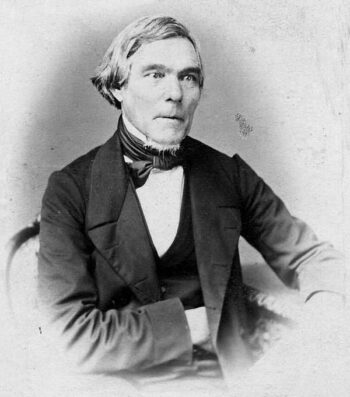
Portrait of Finnish physician and philologist Elias Lönnrot around 1850. Photo: Finnish Heritage Agency
The Kalevala was compiled by Elias Lönnrot (1802–84), a physician, linguist, editor, poet and later professor of the Finnish language.
Born into a poor family in the village of Sammatti in southern Finland, Lönnrot raised his station in life through education. He wrote his master’s thesis on Väinämöinen, one of the epic’s central heroes, and qualified as a medical doctor.
Lönnrot developed a great passion for folk poetry. Beginning in 1828, he undertook collecting journeys through eastern Finland, Karelia, the Kola Peninsula and the area north of the Arctic Circle.
Although he presented the Kalevala as a recovery of ancient poetry, Lönnrot did more than record and edit. He modified, rearranged and, in places, composed linking passages to create narrative coherence. Even so, only around 3 percent of the final text was written by Lönnrot himself. The result is both a work of folklore and a constructed literary epic.
Promoting the Finnish language was central to his work. In 1831, he helped to found the Finnish Literature Society, which became crucial in preserving Finland’s cultural heritage.
How did the Kalevala come into being?

Anders Ekman: Väinämöinen Stringing his Kantele, 1855 (Finnish National Gallery Collection/Ateneum Art Museum)Photo: Finnish National Gallery/Lauri Asanti
Lönnrot’s original aim was to preserve Finnish-language poetry and strengthen the status of Finnish as a literary language. At the time, Romantic nationalism was sweeping through Europe’s intellectual circles, encouraging nations to seek validation in their folklore and oral traditions. The idea of a unified epic emerged gradually during his collecting trips.
At the time, Finland was not an independent nation. Having been part of Sweden for centuries, it became an autonomous Grand Duchy within the Russian Empire in 1809. Throughout the 19th century, a growing national movement sought to strengthen a distinct Finnish identity.
Familiar with works such as Homer’s Iliad and Odyssey, Lönnrot began to see how fragmented folk poems could be shaped into a coherent, story-driven whole. Across Europe, interest in national epics and folk traditions had been growing since the late 18th century. Influences ranged from the Nibelungenlied and the Edda to James Macpherson’s Poems of Ossian. Earlier collectors of Finnish and Karelian folklore, such as Christfrid Ganander and Zacharias Topelius, also paved the way.
In this climate, the Kalevala became emblematic of a people with their own history, mythology and voice, although most of its .
The Kalevala at a glance

Akseli Gallen-Kallela: Lemminkäinen’s Mother, 1897 (Finnish National Gallery Collection/Ateneum Art Museum)Photo: Finnish National Gallery/Hannu Pakarinen
What is it?
The Finnish and Karelian national epic – a volume of mythological poems based on oral tradition.
Who compiled it?
Elias Lönnrot (1802–1884), a physician, linguist and folklore collector.
When was it published?
- Old Kalevala: 1835
- New Kalevala (definitive version): 1849
How was it created?
Elias Lönnrot collected the centuries-old oral poems across eastern Finland and Karelia and edited them into a unified epic narrative.
What is it about?
Creation myths, rival realms, magic, heroes and tragedy.
Why does it matter?
The Kalevala helped to shape the Finnish national identity, inspired generations of artists and influenced figures such as J.R.R. Tolkien.
Can you read it in English or other languages?
Yes, in more than 60 languages worldwide.
More information about the Kalevala can be found on the Kalevala Society website.
By Emilia Kangasluoma, February 2026
Source: finland.fi
